BATTLESTAR blown suppression device

namfreak

Active member
Feedback
2 (100%)
Credits
92CR
OK so a while back on Jamma Plus I posted about this machine

It had sat broken an un-used in the corner of a community hall where my daughter attends one of those "After School" clubs

I got talking to the volunteers and they said it hadn't worked in years but the kids loved it when it had

DSC_2978a.jpg


DSC_2920a.jpg


So it's a Galaxian clone called Battlestar made by Century Electronics in 1980

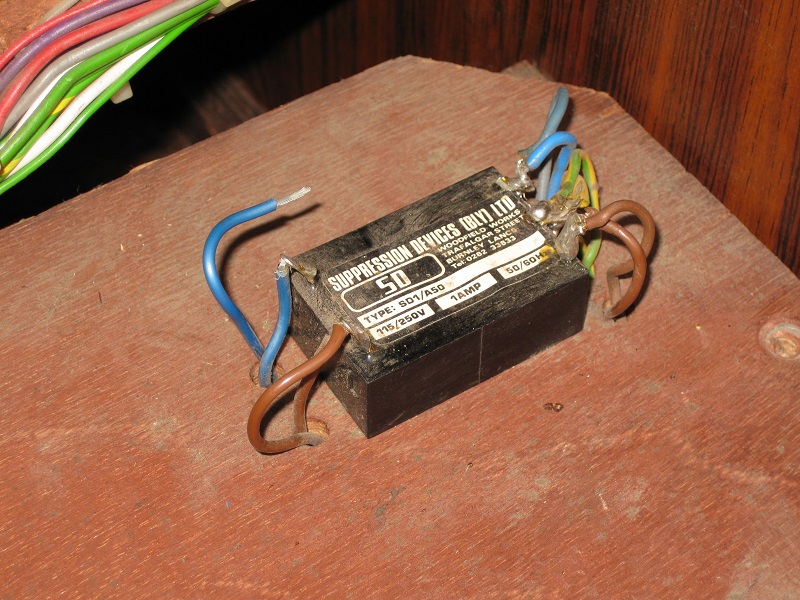
The monitor was serviced and repaired from frame collapse, speaker wires made good, fuses changed, fire button changed and some soldering completed to this little suppression device
supdev1.jpg


The kids have been enjoying it for the last 6 months in the after school club. It's great to see children from 4 - 11 years old being attracted to, and playing this lovely old machine! I think some of the volunteer ladies remember these machines too and have a few sly games!

However it's now broken down after a few months of good intensive use. The ladies told me it started smoking and stopped - which I thought odd as I'd always a fuse to blow first

Oh well so I took the back off tonight and found the little suppression device has melted!

Can anyone offer any guidance on the function of this part and a suitable replacement for this long obsolete component?

Marked as Type: SD1 / A50, 115 / 240 V 1 amp, 50 / 60Hz. It's shown on the schematic as a "Filter"

DSC_0472a.jpg


namfreak2018-07-05 21:08:13
 

obcd

Active member
Credits
3,830CR
It looks like a typical EMI filter that is used on the incoming mains lines. It contains some coils in serie and some X2 capacitors between L, N and earth. You can install any such filter that was designed for the same mains voltage and can handle the current the machine needs. You can temporary remove the filter and measure the power consumption of the cabinet with a simple power meter. That will give you an idea of the average current the cabinet is consuming.

Usually, at the entry of a decent PC supply, you will find such a filter as well. (Components soldered on the pcb). So, if you can find such a defective supply, you can use the filter from it as a cheap replacement. (If you remove the bridge rectifier you disable the rest of the (faulty) supply).

It's possible that the cabinet electronics started to consume way 2 much current, and that overcurrent caused the filter to go bad. Most of the time if they become bad, one of the capactors becomes short and the fuse goes out. They do fail on their own, but can also fail due to an overcurrent situation.
 

namfreak

Active member
Feedback
2 (100%)
Credits
92CR
Thanks for the response
I don't have a power meter to measure consumption - nor do I have old PC's to use the in line filters from

Would something like this do the job?

http://uk.farnell.com/corcom-te-connectivity/3eq1/filter-3a-1-phase/dp/9586210?mckv=sZzTHB8Y5_dc|pcrid|78108416829|kword||match||plid||slid||product|9586210|pgrid|20220747669|ptaid|pla-321186695500|&gross_price=true&CATCI=pla-321186695500&CAAGID=20220747669&CAGPSPN=pla&gclid=EAIaIQobChMIkt-t1MeR3AIVqrXtCh25rQO5EAYYBCABEgLGcfD_BwE&CAWELAID=120173390000424186

The amperage is what confuses me - if the original was 1 amp do I have to replicate that exactly?
 

obcd

Active member
Credits
3,830CR
A higher amp rating isn't a problem. It's simply the maximum current that can pass trough the filter. As you can see there are some coils inside.

The thickness of the wires on those coils determines how much current they can have before they heat up to much to be considered safe.
 

namfreak

Active member
Feedback
2 (100%)
Credits
92CR
Thanks - so considering the original item was rated so low (1 amp) I guess I'm best to find the lowest amperage rated filter to protect the original circuits and PCB?

I would have thought it would have blown fuses before blowing the filter..?
 

tb2000

Active member
Feedback
4 (100%)
Credits
3,584CR
That's probably blown purely due to age I should think. Every electrical component has a rated lifespan whether it's on hours or cycles, whatever, so something in that box has probably come to the end of it!

tb20002018-07-16 15:55:53
 

obcd

Active member
Credits
3,830CR
No, you don't have to choose a low rating. The filter is there to supress EMI, not to function as a protection device agains short circuits or overloads. You will see however that the higher the current, the more expensive they are. Besides that, electronics usually fail faster than fuses do. The fuses only prevent the start of a fire when things really go wrong.

It is possible that there is an overload in the machine that caused the filter to burn out.

You simply can test the machine without the filter to see if everything works properly. The filter is not an essential component, it's just there to furfill radiation regulations.
 

namfreak

Active member
Feedback
2 (100%)
Credits
92CR
OK so I've got this machine working again for the Autumn term at the After School club

During the summer holidays I got a 5A in line filter from Farnells with spade connector tabs

I removed the failed original unit and joined the old wiring to a connector block. I extended the wiring from the connector blocks to end in a spade connector. The original mains wiring is a tad thicker than what I had in stock (16/0.2 gauge)so I doubled up with two runs of wire.

Screwed the in line filter to the base of the cab and connected it all up. Game now works again and has had a few hours use already with the kids glad to see it back in action (and some of the staff too!)

BSOCT1.jpg


BSOCT3.jpg


BSOCT4.jpg


BSOCT6.jpg


BSOCT7.jpg


BSOCT8.jpg


Made a couple of videos of this lovely little cab too:

https://www.youtube.com/watch?v=VxY01l6o3kg

https://www.youtube.com/watch?v=_Uz3C6AHEsg

https://www.youtube.com/watch?v=2JeSH4z_55M

https://www.youtube.com/watch?v=T0uUaRm1FM0
 

obcd

Active member
Credits
3,830CR
Good to hear it works again. Doubling the wire section wasn't really necessairy. It's not like the unit is consuming so much current that the wires would start to heat up. This is more a concern with electrical heating devices that consume 1500 - 3000 W Your cabinet will likely be between 200 and 400W. A cheap consumer wattmeter can give you the exact numbers. If things heat up, it are usually the spade connectors when they aren't crimped properly. I prefer a drip of solder to ensure electrical contact between the wires and the spade connectors.
 

namfreak

Active member
Feedback
2 (100%)
Credits
92CR
Thanks for the reply
Good to know doubling up on the wires wasn't totally necessary - I was just going for a belt and braces approach!

Question for anyone than can help:
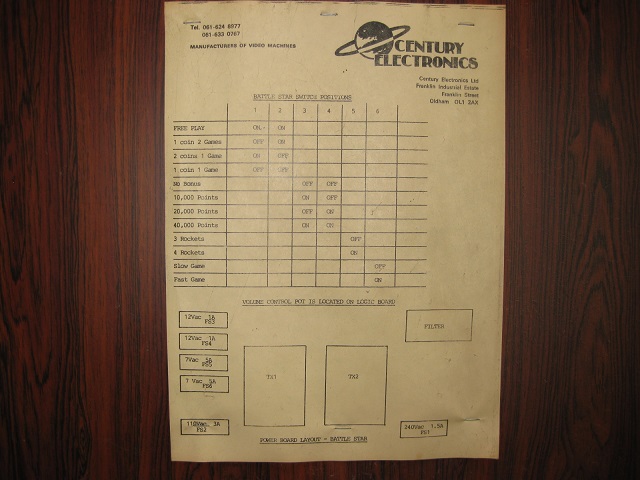
If the 2 x transformers in this cab die - what's the best way of going about replacing them (switching PSU??) and if so how do I determine the voltages required (other than what's printed on the back door sheet in the Youtube videos)??
 

dj_yt

Active member
Feedback
3 (100%)
Credits
787CR
Nice work on keeping this cab running! :)

Regarding the voltages, I'd presume the best time to measure them is now, whilst the cab is working correctly? :)
 

obcd

Active member
Credits
3,830CR
Likely one of the 2 transformers is the isolation transformer. It is needed to isolate the monitor chassis from the mains. Usually, it's output is only 100 - 120V. The other transformer will have multiple secundary windings that the power supply uses to produce it's 5V, -5V and 12V

You could try to find a service manual for your machine, or another machine from the same manufacturer and year. It should contain the details you are looking 4.
 

namfreak

Active member
Feedback
2 (100%)
Credits
92CR
I've searched online for a manual - but with Century Electronics being a small manufacturer that seemed to copy larger manufacturers work, I can't seem to find anything that survives

There is this back door sheet that gives a few clues on voltages:

DC1.jpg
 

obcd

Active member
Credits
3,830CR
Looks like you have a couple of 12VAC fuses and a couple of 7VAC fuses. You also have a 110VAC fuse.

Maybe have a look at the wires going from the power supply to the game board. Try to find the GND wire and measure the other voltages in accordance to that GND.

You should have a 5V and likely also a -5V. If you find some 4116 ram chips on the game pcb's or 2708 eproms, those need -5V

The 12V and eventually -12V are most of the time only needed by the sound amplifier circuit.

The 110V AC is likely going to your monitor chassis and to your marquee backlight.

Try to figure out brand and model of your monitor chassis. Or post pictures of those so some one can identify them. Knowing brand and model might give an indication what supply it needs. (usually only 110V, but older ones might use other votages as well.

The fuses give you an indication of the current the transformer should be able to produce on each voltage rail. You will have A 110V, 7V and 12V winding. It's possible that the windings have a wire in the middle. This can be tested with a continuity tester.
 

RaveN

Active member
vacBacker
Feedback
1 (100%)
Credits
1,325CR
An EMI filter isn't required on your cab. The one you've bought (like most) have a low-pass filter for pretty high frequencies for things like SMPS. There's obviously no harm in having it, but it's something else to go wrong at some point. THe original should never burn though, the X1/2 caps and coils have a primary role of not doing so, so I'd wire direct to mains and put a more appropriate fuse before and see what happens.
 

obcd

Active member
Credits
3,830CR
I had several EMI filters in electrical drills that became shorted, so those X1/2 capacitors are not as reliable as you would like to believe.

The digital clock in our oven uses one as serie resistor. I had to replace it already twice as it's characteristics had changed so much that the electronics didn't work anymore.
 
Top