

At smarty's recent meet I asked if anyone had any untested/broken Sega boards they wanted to sell me cheaply. Alpha1 kindly obliged, and brought me an E-Swat for a very reasonable price!

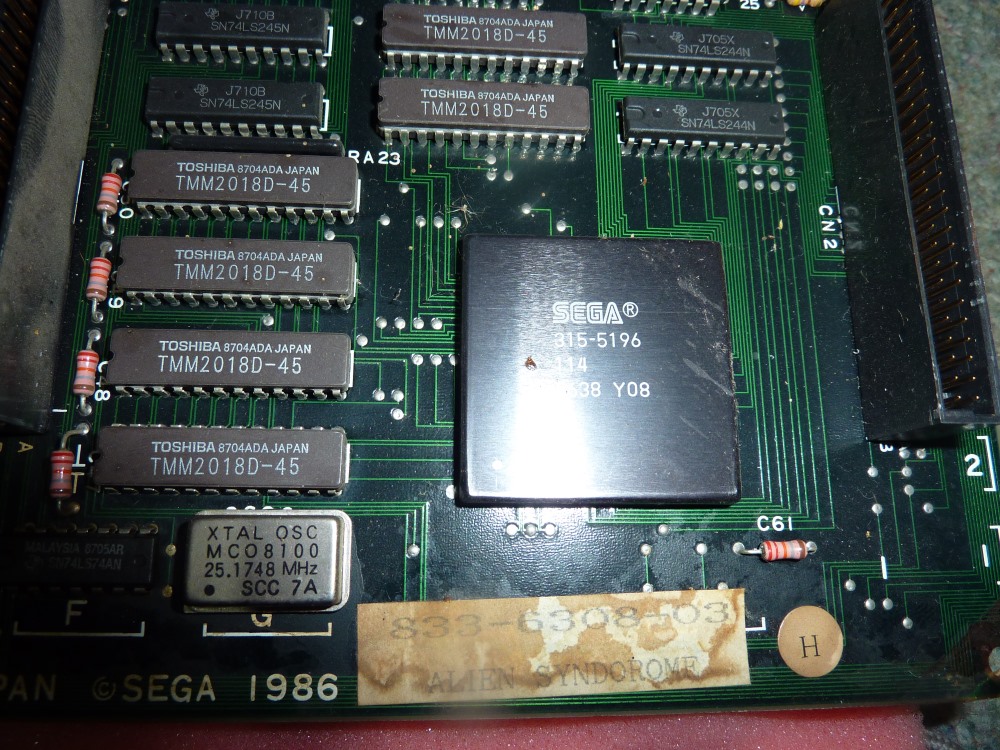
The upper ROM board was an E-Swat, the lower PCB originally an Alien Syndrome. Which explains why the upper board was in great condition and the lower board a little bit more grubby.
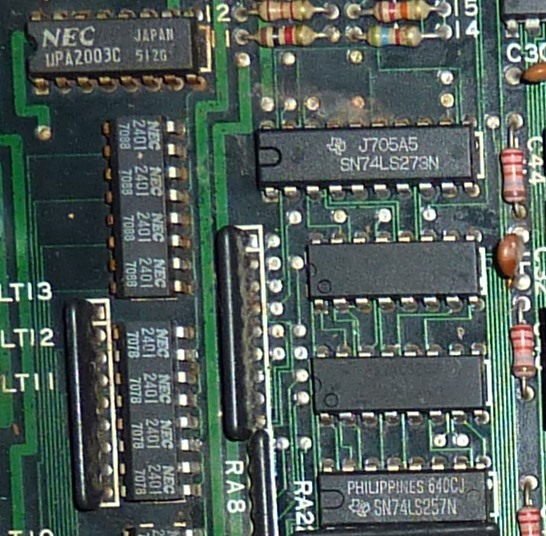
The board initially did nothing, and had no audio or video. The video signal didn't even sync.

I inspected the board and noticed a corner had been bent. The track highlighted below was for the video sync. There wasn't continuity along this track, so that explained why the video signal wasn't syncing.
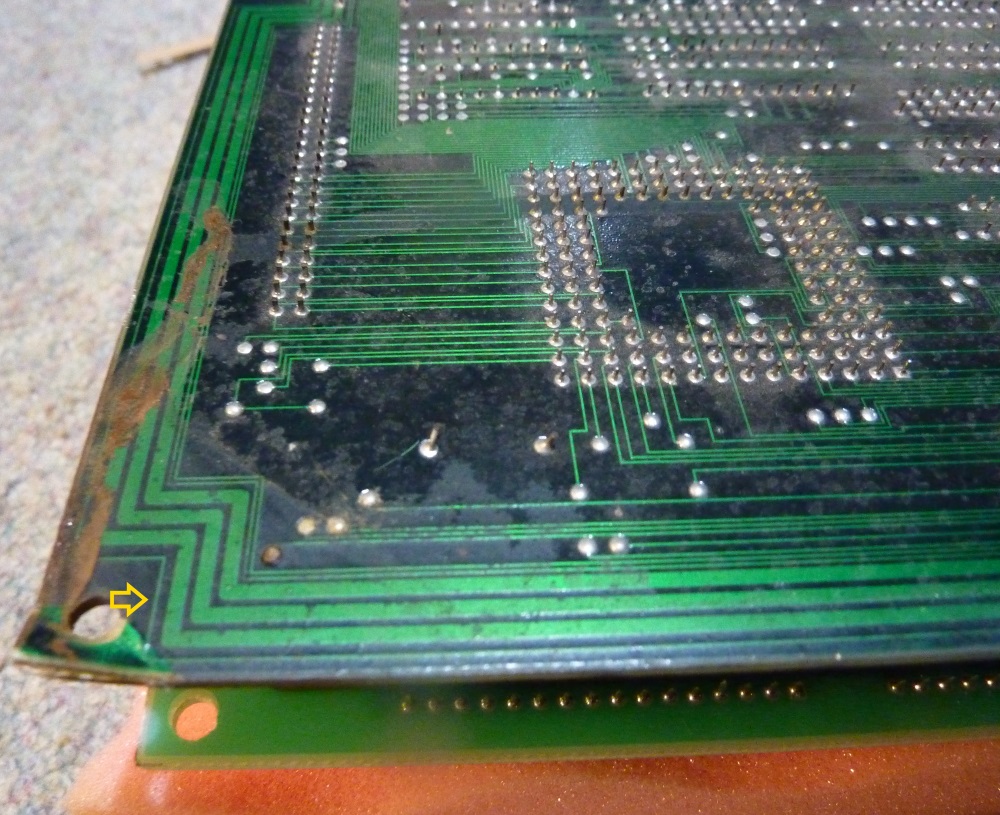
I patched the track with some kevlar wire. I secured it with the glue gun. Not graceful but good enough.
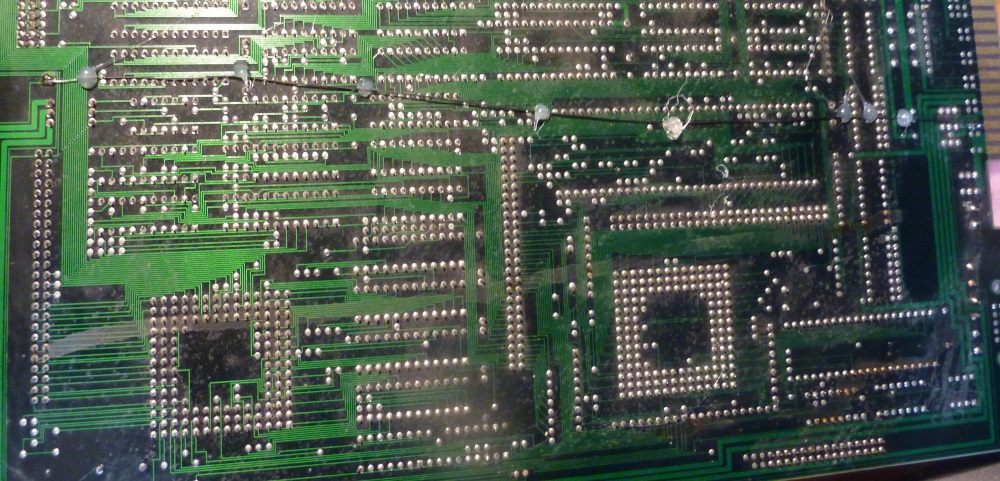
Whilst I now got a video sync signal, the board still refused to boot.
At this point I removed the suicide processor and replaced it with a standard 68K. I programmed the relevant ROMs from porchy.
The board still didn't work. As a quick test, I installed the ROM board onto the Shinobi board I'd previously repaired. It worked fine and past all tests.
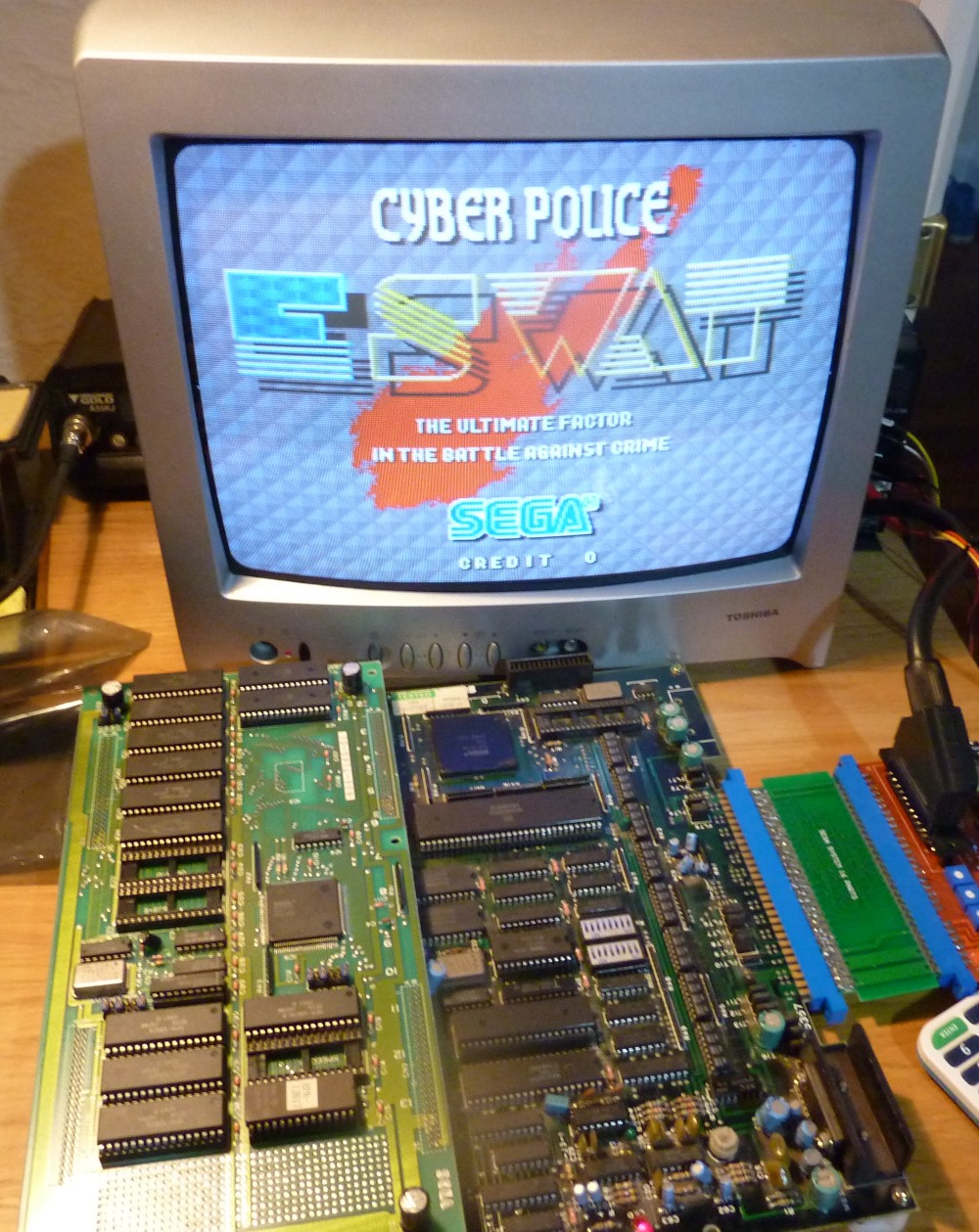
This was good news; it meant the ROM board was fine and I could concentrate on the main PCB.
Surprisingly, after swapping the ROM board back again I managed to briefly get the PCB to spring into life after a few power cycles and pressing hard in various areas!

Colours and controls were missing. And on power cycling, I couldn't boot the board again.
I then cleaned the edge connector of the PCB with a magic eraser and IPA. This fixed the problem.
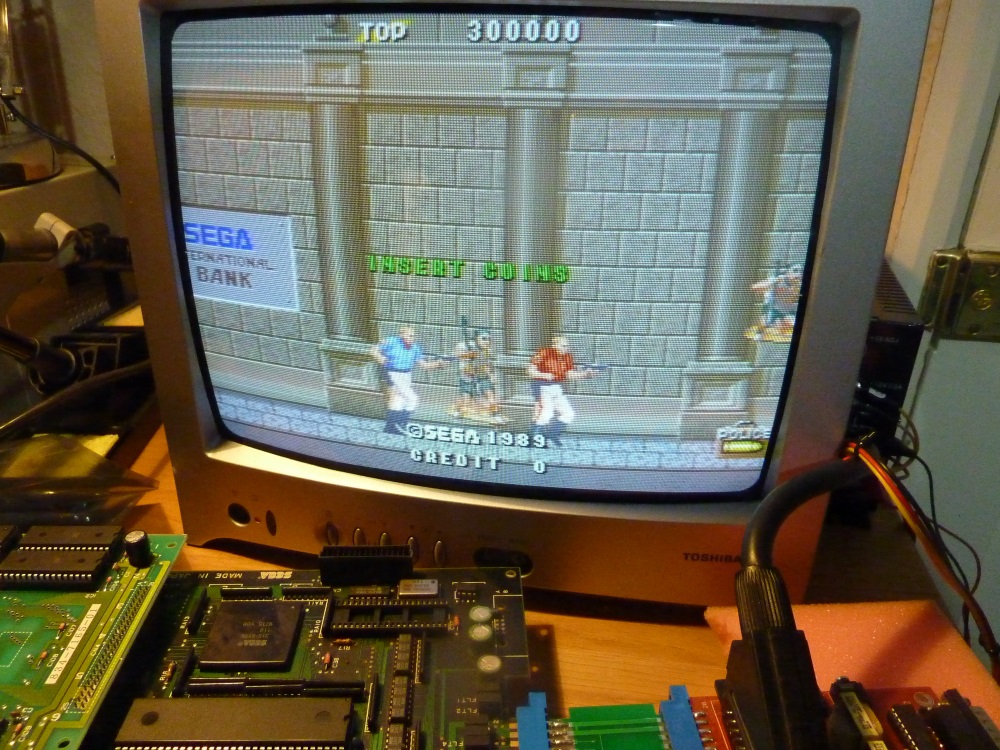
The board pretty much fully works and all tests pass. There are a couple of minor problems:
- The new CPU initially needed to be pressed when the board was powered on to get the board to boot. I reseated it and this seemed to solve the problem, but I suspect cleaning the socket might help if this happens again.
- Sound samples (not YM music and effects) would cause a temporary buzz when triggered. Leaving the PCB on for a few minutes caused this problem to go away. I imagine this is a bad capacitor somewhere, but I haven't replaced the sample circuit caps for now.
Overall a nice easy fix for a dead board!
The upper ROM board was an E-Swat, the lower PCB originally an Alien Syndrome. Which explains why the upper board was in great condition and the lower board a little bit more grubby.
The board initially did nothing, and had no audio or video. The video signal didn't even sync.
I inspected the board and noticed a corner had been bent. The track highlighted below was for the video sync. There wasn't continuity along this track, so that explained why the video signal wasn't syncing.
I patched the track with some kevlar wire. I secured it with the glue gun. Not graceful but good enough.
Whilst I now got a video sync signal, the board still refused to boot.
At this point I removed the suicide processor and replaced it with a standard 68K. I programmed the relevant ROMs from porchy.
The board still didn't work. As a quick test, I installed the ROM board onto the Shinobi board I'd previously repaired. It worked fine and past all tests.
This was good news; it meant the ROM board was fine and I could concentrate on the main PCB.
Surprisingly, after swapping the ROM board back again I managed to briefly get the PCB to spring into life after a few power cycles and pressing hard in various areas!
Colours and controls were missing. And on power cycling, I couldn't boot the board again.
I then cleaned the edge connector of the PCB with a magic eraser and IPA. This fixed the problem.
The board pretty much fully works and all tests pass. There are a couple of minor problems:
- The new CPU initially needed to be pressed when the board was powered on to get the board to boot. I reseated it and this seemed to solve the problem, but I suspect cleaning the socket might help if this happens again.
- Sound samples (not YM music and effects) would cause a temporary buzz when triggered. Leaving the PCB on for a few minutes caused this problem to go away. I imagine this is a bad capacitor somewhere, but I haven't replaced the sample circuit caps for now.
Overall a nice easy fix for a dead board!

