
IC Tester recommendations

Ace`

PlanB contributor #1
Feedback
40 (100%)
Credits
4,040CR
I use an old ABI Chipmaster (pre compact model) that I got from ebay which is very good. If money is no object you can get the new compact one from ABI still, but the second one you linked to is a clone of the chipmaster and very good for the money.

Although check the device list first to make sure it covers everything you need as I know they removed support for some stuff and added others the chipmaster didn't originally support.
 

Judder

Active member
Feedback
2 (100%)
Credits
1,009CR
Funnily enough I was toying with building a connector for my build of Paul Swan's Arduino tester and writing some code to do exactly this (*but didn't get any further than the 'oh, yes that would be a good idea' phase)

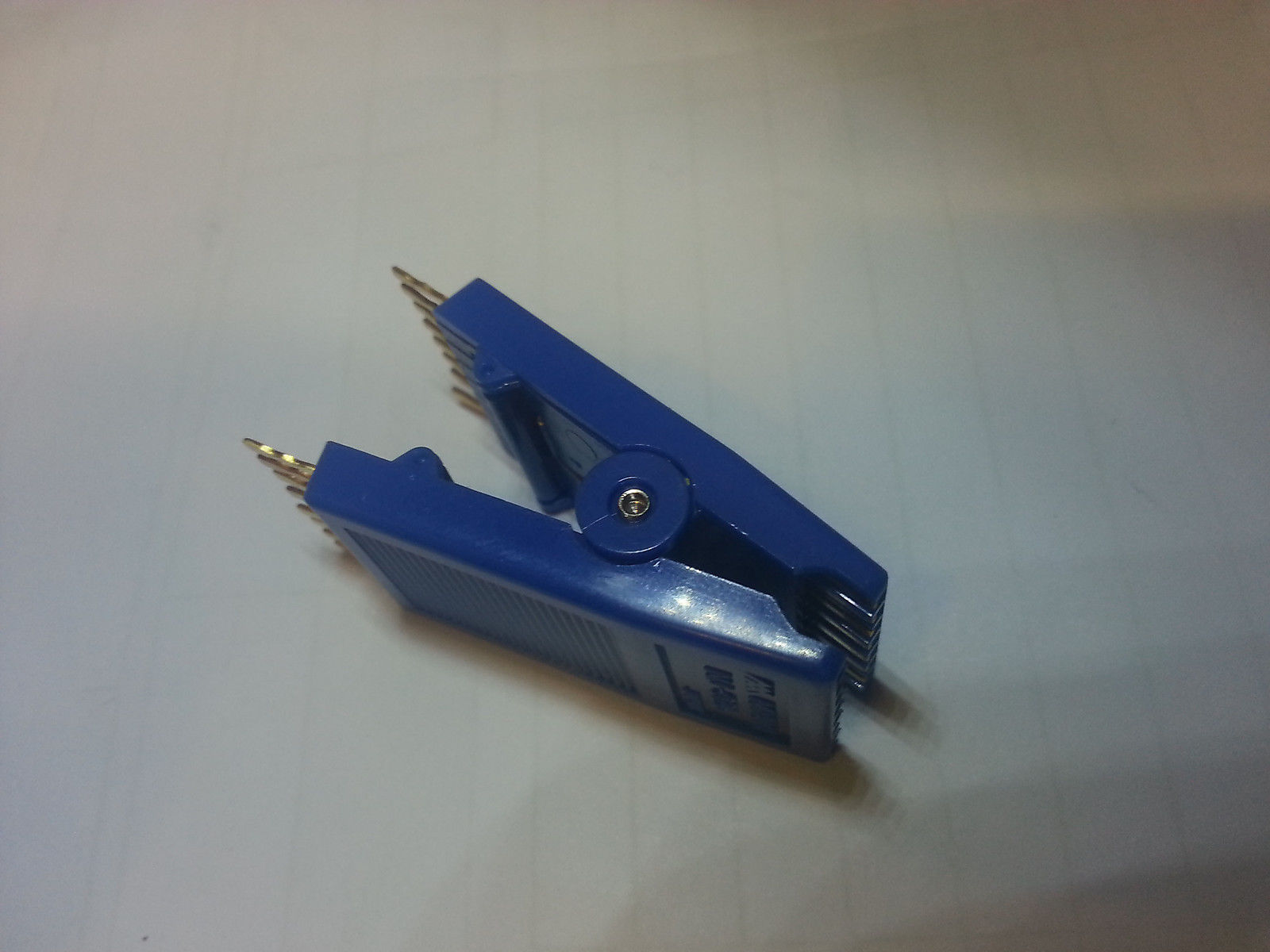
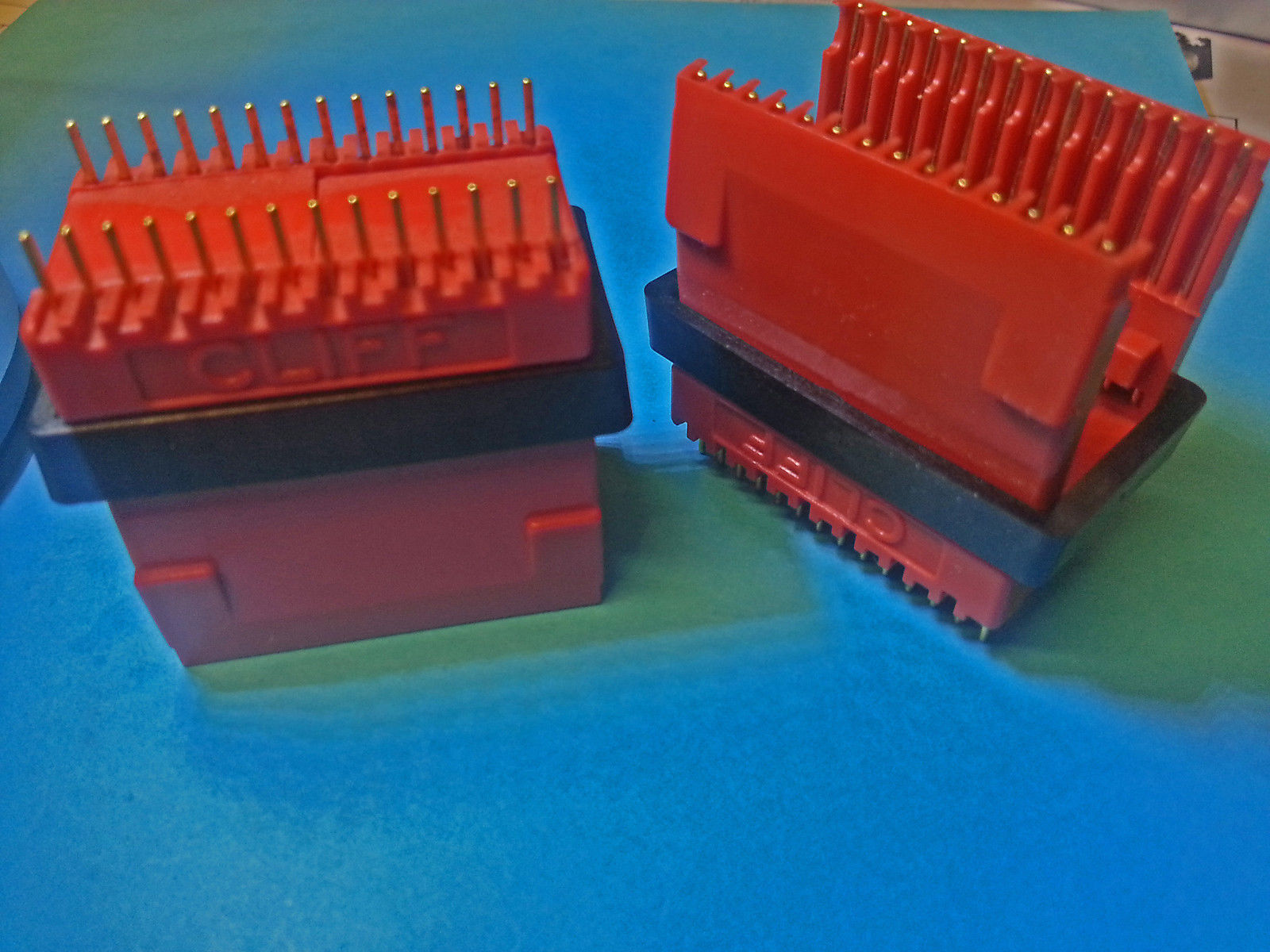
I also have the MiniPro which does all the basic 74X TTL chips and have a remote clip thing made of IDE leads and this clip from eBay that means I can test chips in-situ and EPROMs with the red brick thingy

http://www.ebay.co.uk/itm/231330275408

TTLTesterClip.jpg


http://www.ebay.co.uk/itm/291812086216

EPROMTesterClip.jpg
 

Nes4life

Active member
vacBacker
Feedback
12 (100%)
Credits
1,134CR
If there was a way to repurpose Paul's ICT then that'd be ideal. We've already got the arduino, lcd and leads so just adding a clip or new remote header would be great. Anything I can do to help make that a reality?
smiley2.gif

Nes4life2016-08-02 15:21:14
 

Judder

Active member
Feedback
2 (100%)
Credits
1,009CR
I had a quick read of the source for the Arduino tester on Instructables and in theory changing the mapped pins in this and mapping them to the Mega pins should make this work fairly out of the box


http://www.instructables.com/id/Arduino-IC-Tester/?ALLSTEPS

[font="Courier New, Courier, mono"]/* PINS[/font]

[font="Courier New, Courier, mono"]IC IC Pin[/font]

[font="Courier New, Courier, mono"]14 16 Arduino[/font]

[font="Courier New, Courier, mono"]
[/font]

[font="Courier New, Courier, mono"]8 9 = 5[/font]

[font="Courier New, Courier, mono"]9 10 = 4[/font]

[font="Courier New, Courier, mono"]10 11 = 3[/font]

[font="Courier New, Courier, mono"]11 12 = 2[/font]

[font="Courier New, Courier, mono"]12 13 = 13[/font]

[font="Courier New, Courier, mono"]13 14 = A0[/font]

[font="Courier New, Courier, mono"]14 15 = A1[/font]

[font="Courier New, Courier, mono"] 16 = A2[/font]

[font="Courier New, Courier, mono"] 1 = 6[/font]

[font="Courier New, Courier, mono"]1 2 = 7[/font]

[font="Courier New, Courier, mono"]2 3 = 8[/font]

[font="Courier New, Courier, mono"]3 4 = 9[/font]

[font="Courier New, Courier, mono"]4 5 = 10[/font]

[font="Courier New, Courier, mono"]5 6 = 11[/font]

[font="Courier New, Courier, mono"]6 7 = 12[/font]

[font="Courier New, Courier, mono"]7 8 = GND[/font]

[font="Courier New, Courier, mono"]*/[/font]

[font="Courier New, Courier, mono"]
[/font]

[font="Courier New, Courier, mono"]int Pin14[14]={7,8,9,10,11,12,A7,5,4,3,2,13,A0,A1}; // contains the correct allocation for a 14 Pins IC[/font]

[font="Courier New, Courier, mono"]int Pin16[16]={6,7,8,9,10,11,12,A7,5,4,3,2,13,A0,A1,A2}; // contains the correct allocation for a 16 Pins IC[/font]
 

Asure

Newbie
Credits
133CR
An in-circuit IC tester has been on my wish list for some time. Even for 74LS logic types, with clip-on connector as shown in the posts above. In this day and age should it not be possible to have a simple in-circuit arduino based tester/logic comparator? :)
 

mailmad

Newbie
Credits
6CR
For out of the circuit test, can be used a cheap tester like the above:
https://www.ebay.com/itm/Transistor-Tester-Detect-IC-Meter-Maintenance-Digital-led-Tester-MOS-PNP-T9W1/192729493379?hash=item2cdf92af83:g:GVMAAOSwwcda4xM7

However from my expirience, out of circuit testers are almost useless.

We should know if an IC is good, before a potentialy unnecessary desoldering.

For In circuit IC testing I have the NEAT Mi tester:

https://neatmarine.blogspot.com/2018/11/mi.html

Perform both analog/logic/digital IC testing, without libraries and IC grabbers. The method of this device is a bridge between logic probes and the ABI machine a fellow mention before.

Logic probes are very cheap (set cost less than $100), but unfortunatly provide only one input and one output, which restrict dramaticaly the number of supported ICs (only buffers and inverters can be tested)

ABI is a very good tester, however at >$4500 + modules, is very expensive for a lot of us. And the IC grabber fail to penetrate coated IC pins.

NEAT Mi, among others, have some special multipoint hand probes, with tip from steel to penetrate any coating. I can use them on conventional and SMD ICs.

By observing the timing diagram on screen, I can decide if a gate is good, not good, or disabled by shorting. I have to mention need some initial time to get familiar with the true tables.

Cost me about $1500 (new). Is more affordable than ABI, but is not cheap.

I guess the reason for that is its additional functions. Have VI signature tester, oscilloscope, protocol reader, and several more.

VI is very useful, and for those who have it in their instruments, they know.
 

TheDaddy

Senior Member
vacBacker
Feedback
14 (93%)
Credits
7,230CR
Biggest problem is always the cost, I personally can not justify spending $4500 on a tester. Sadly this means I have to pull chips I suspect and hope that they are faulty once pulled. Once pulled I stick them in my TL866 and test them, I also have the transistor tester listed above but only use this if I cant read what the chip is. I have been toying with buying the IC Clips but again they are very expensive and unsure if this will work when the IC is in circuit & connected to my TL866 ???? Does anyone know if this will work ???? I think the HP Comparator is also a good tool, But yet again no availability and are expensive when they come up for sale. We really need a cheap simple option !!

Dave.
 

mailmad

Newbie
Credits
6CR
TL866 will not work in this case, for the following reasons:
[list type=decimal][*]Does not have power enough to ignore gates output from adjacent ICs[*]If an IC have disabled some gates, which is very often, those have always shorted by circuit inputs to + or -. Any out of the circuit IC tester, find such ICs as defected, even if are good.[*]IC clamps have contact issues, especially when PCB is coated, and you need a lmany clamp kinds, to cover all pinout sizes.[/list type=decimal]

For the 1. ABi and Mi have both high power output to compesate this. Also have safeties to avoid any damage in case of shorting in circuits.

For 2. you have to teach ABi that the specific IC have disabled gates, or to have two identical PCBs (the one in a working condition).

Mi have a different approach. Check for shortings by VI function, and then check individually every of the remaning gates in an IC.

For 3. I guess Mi is better in this field, because does not use IC clamps, but few probes (for gate by gate testing, no need many touching points), with sharp steel tips which penetrate a possible coating.

If you use clamps, and the PCB have coating, you must scrach it thoroughly to be sure all pins are contact properly. From my expirience this procedure is time consuming, need care to avoid PCB damage, and destroy the protective material for good.

ABI have the advantage to test more complicate ICs, like microprocessors. Mi doesn't.

So, when a PCB with microprocessor arrive in my workshop, I check everything else with Mi, I desolder only the microprocessor, and test it with a cheap out of the circuit tester.

I have two out-of-circuit IC testers. One Sunshine (cost me $80) and one ABI (cost me $800).

The second have some bugs, however have richer library.
 
Top