

OK, apologies, that's not a Smash TV reference and it's not really arcade related (and it's a bit of a sh*t fix, to be honest), but I've managed to fix sod-all arcade stuff lately, so thought I'd talk about this piece of history:
The Mini Marco bingo machine:
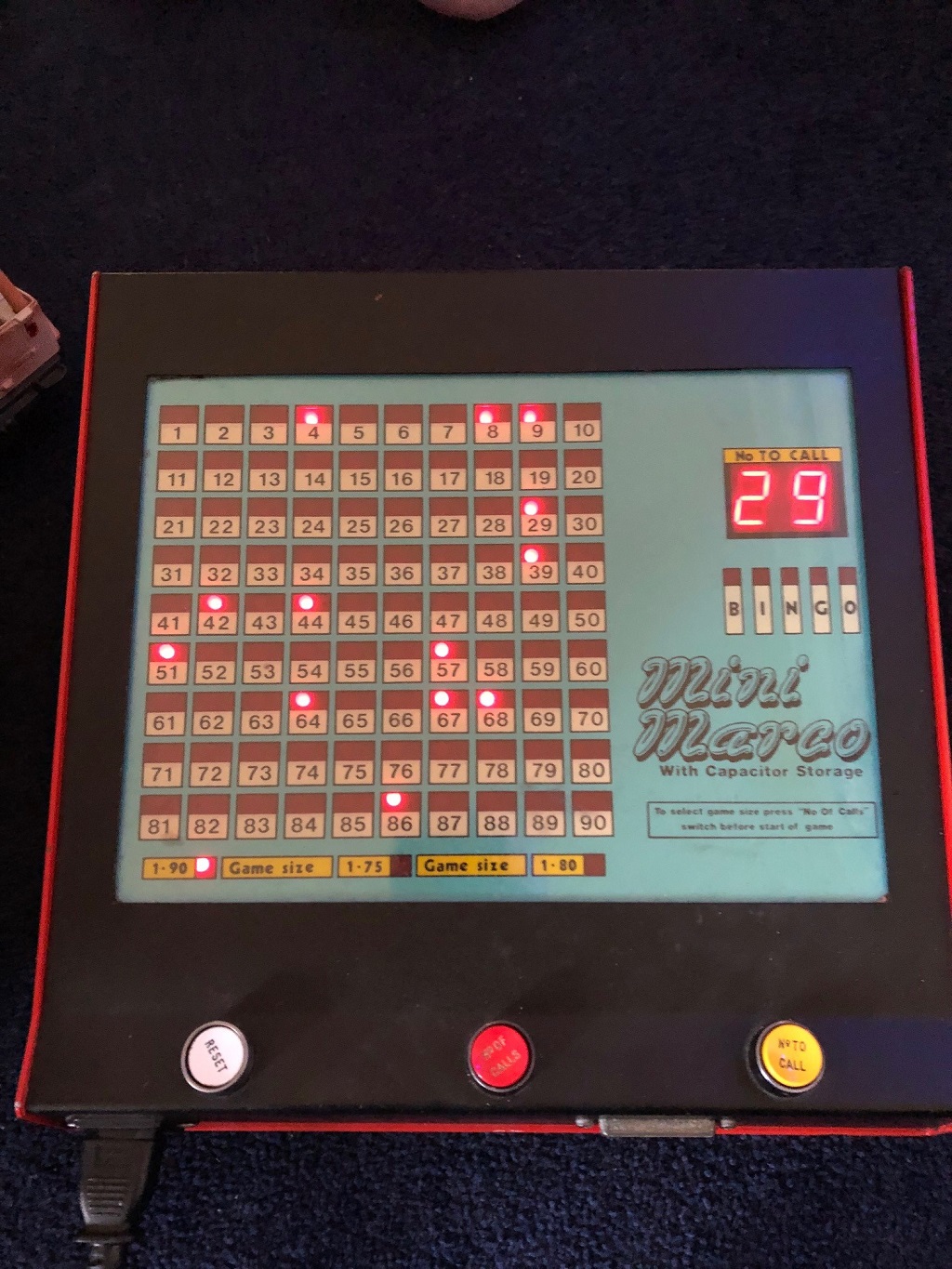
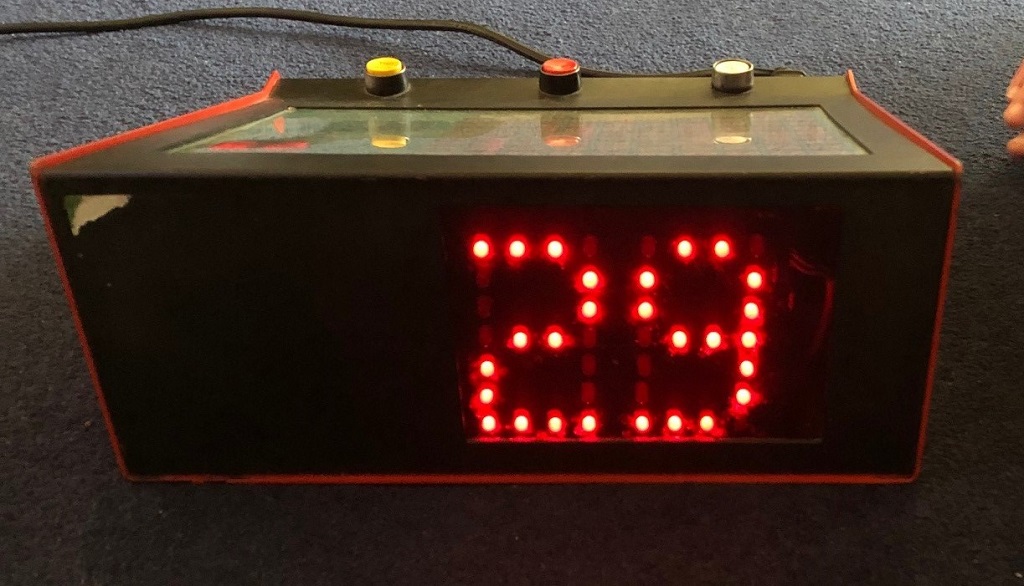
Mid 1980's. It was in use in a local community centre, but had recently started cutting out and losing the values.
So I figured I'd take a look to save bingo callers from being handbagged and bottled with Brown Ale.
What's inside:
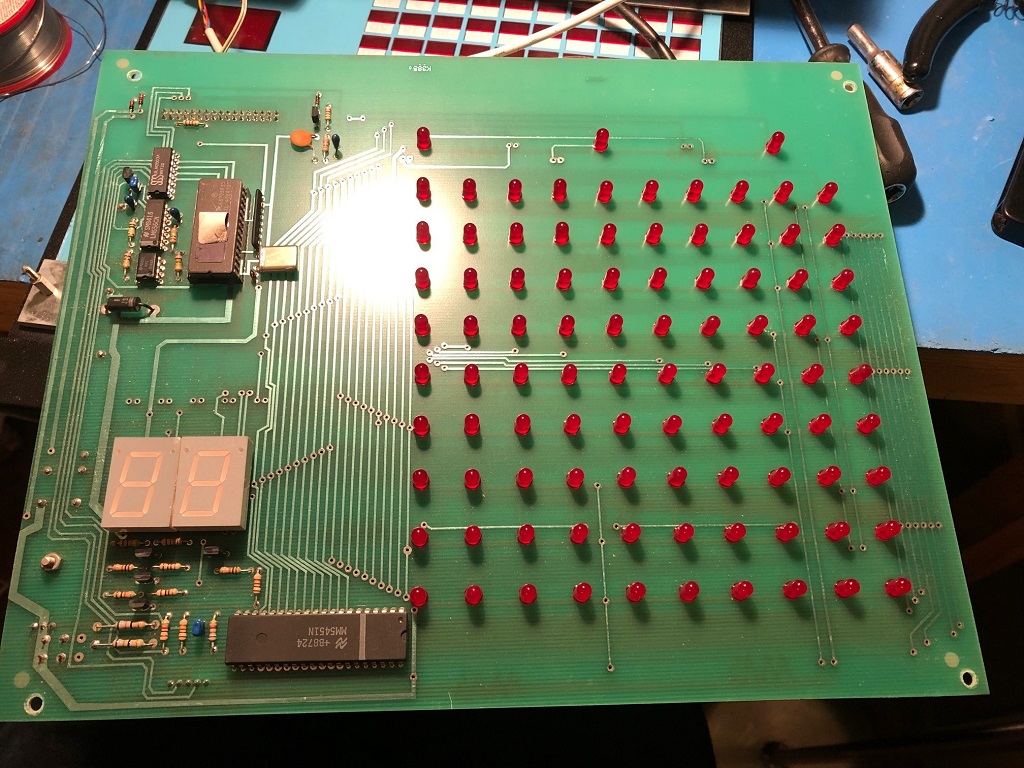
Not a great deal. A processor and an LED controller.
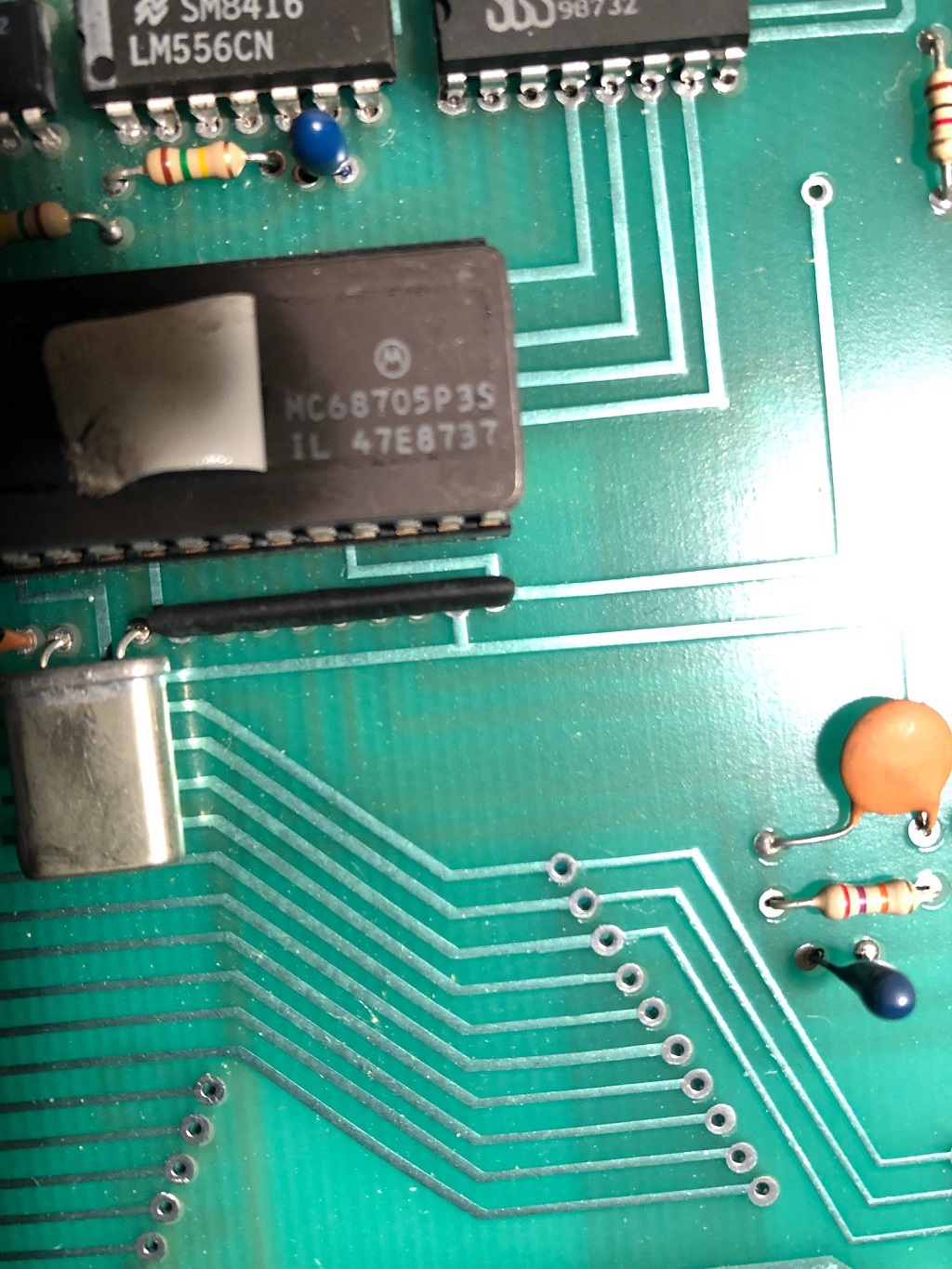
The processor is a Motorola MC68705 microcontroller with EPROM storage.
Sadly my EPROM reader couldn't dump it, and I'm not sure the contents can actually be dumped. Everything else is still available, so it's a bit irritating this bit is irreplaceable, although it's probably not the most complicated bit of software ever written.
As for the power problem, I was expecting dry joints and bad electrolytics, but I got a surprise:
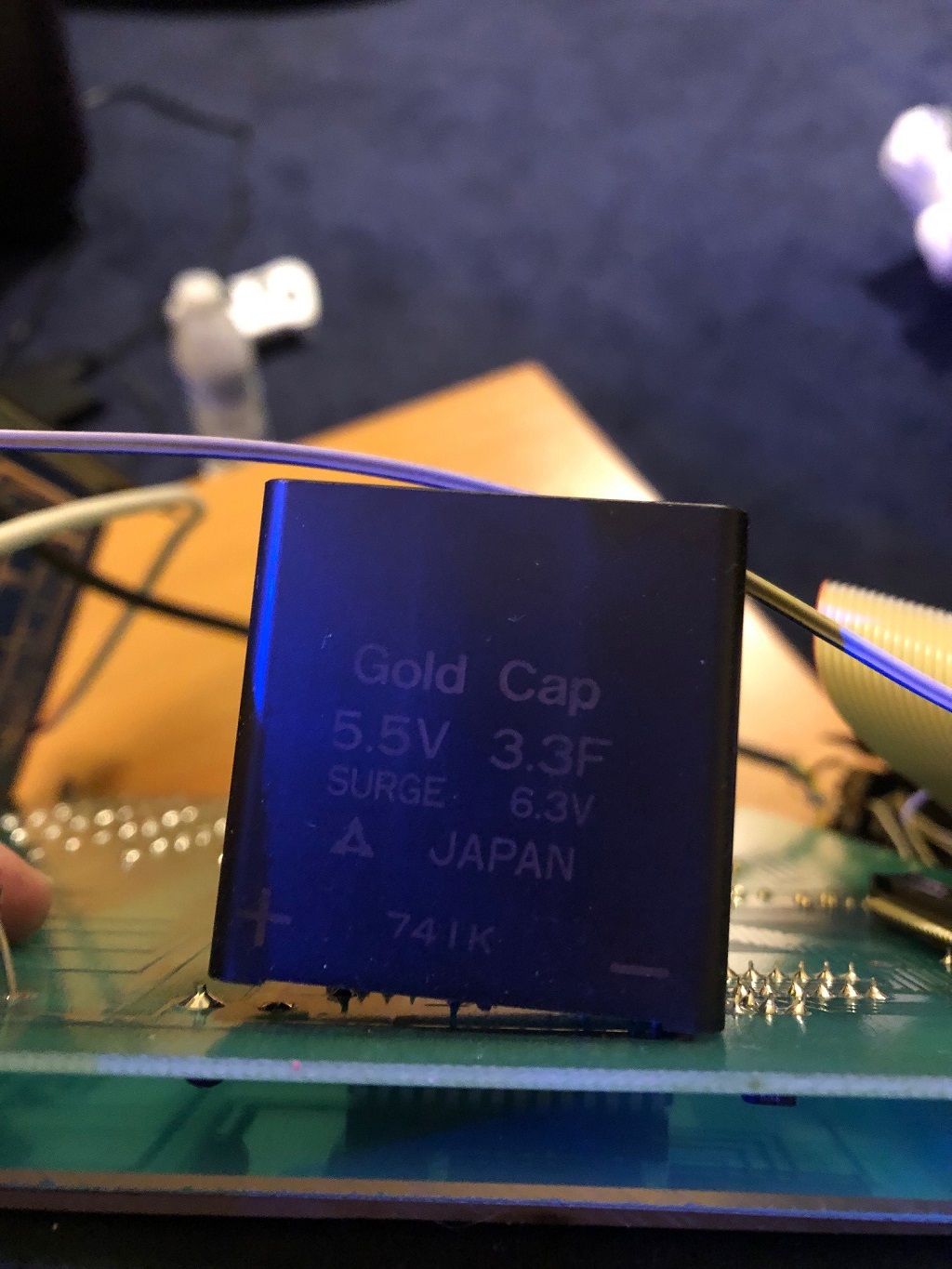
A huge supercapacitor. Not sure why I was surprised, it said 'with capacitor storage' on the front.
It had snapped-off. I re-attached it, but it was obvious it did nothing of use - the thing lost settings the instant the power was removed.
I tried putting 5V onto the cap separately and it was clear it wasn't holding.
So I ordered the nearest thing I could (a 5 Farad, 6V supercap).
Things have shrunk since the 80's
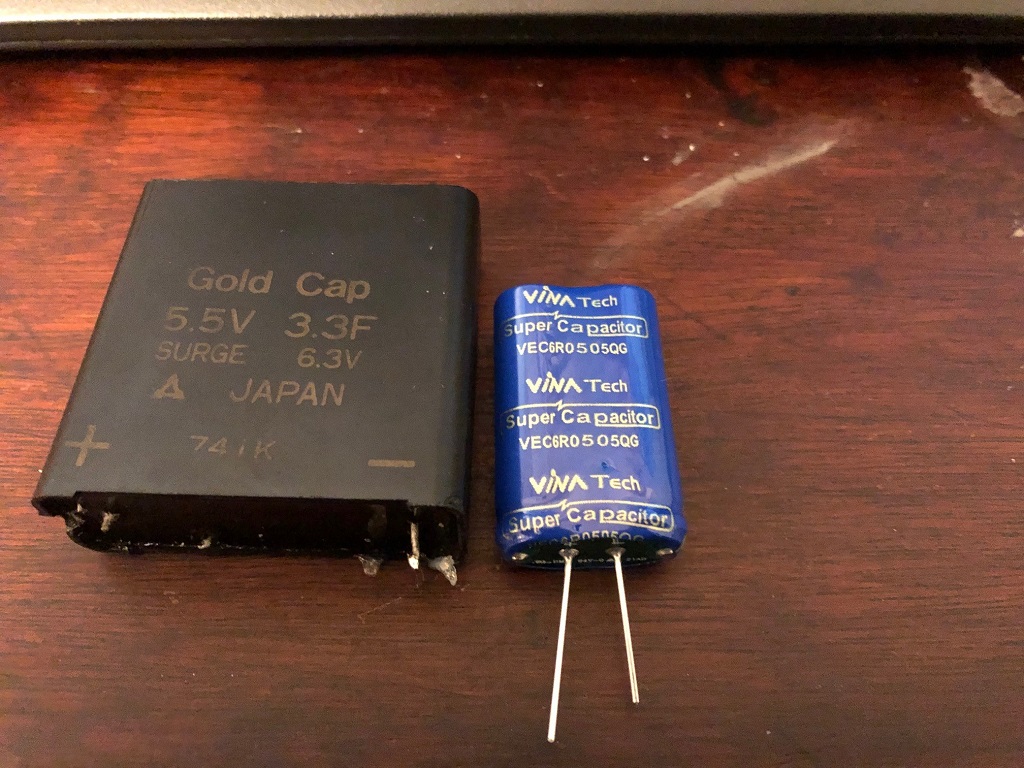
I put it in and....
The unit wouldn't start at all.
After a bit of head scratching, it turns out that supercapacitors weren't just bigger in the 80's, they also had sh*tloads of ESR (unwanted resistance).
So I put together about 10 ohms of resistors and covered them in heatshrink (sadly I had no single 3 Watt, 10 ohm resistors handy). This seemed to be the sweet-spot (not having a datasheet for the 'Gold Cap). Any less and the unit couldn't provide the current to charge it (the transformer output would collapse). Any more and it's just far too long to charge - the time constant (63% charge) is R * C, so even 10 ohms (and 5 Farads) is 50 seconds to charge to just over 3V, so you'd be waiting an age after power-on for the backup to be available.
The other issue with the resistance is the voltage drop when the power is removed and the capacitor has to provide the power. To minimise this I put a diode in there, which has less drop than the 10 ohms.
The messy end result:
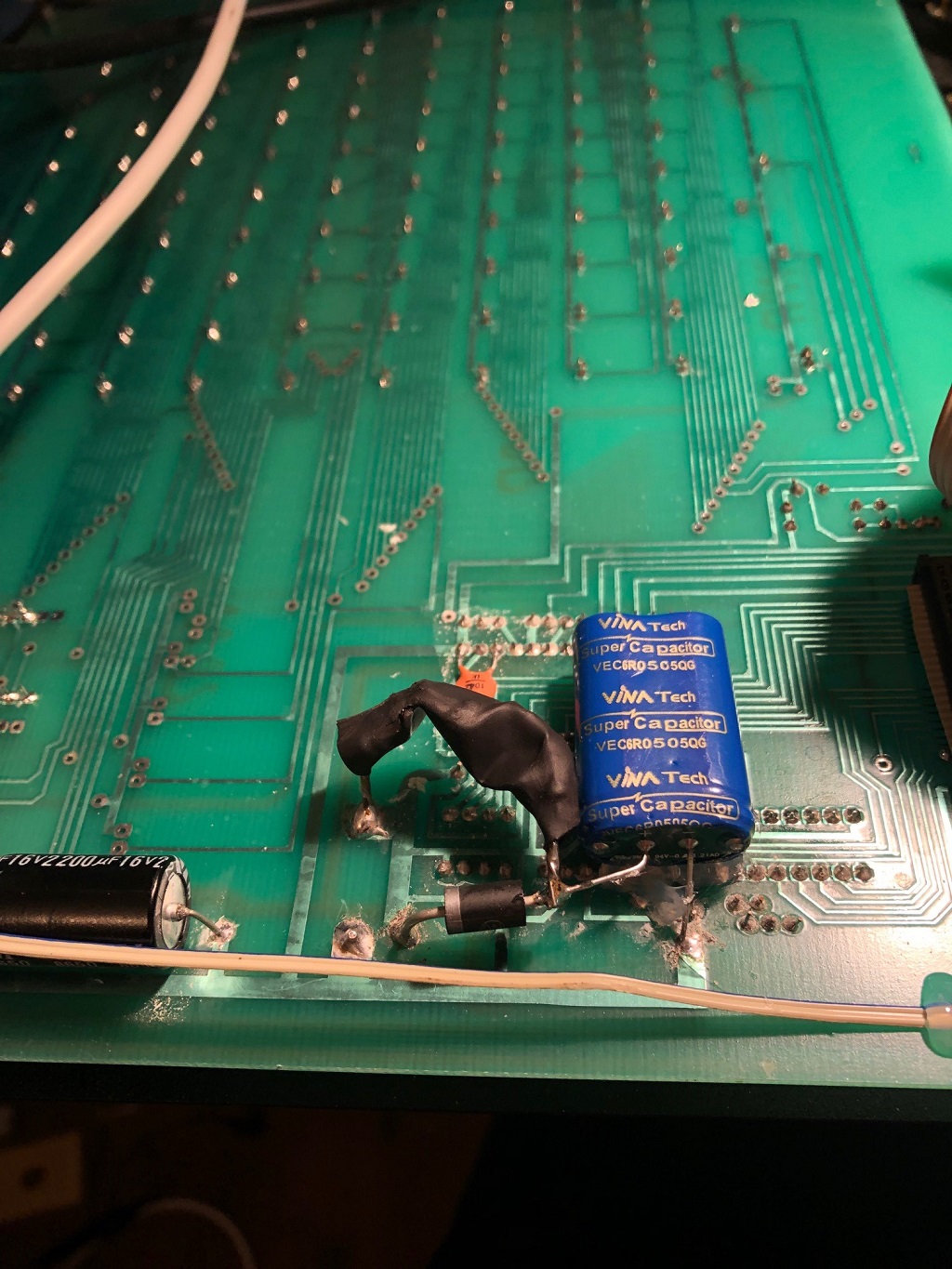
And it works. You can now pull the plug for minutes and it'll retain the storage.
Some new microswitches, a bit of cleaning and straightening and it's back to the community centre.
John Bennett2022-03-11 23:38:05
The Mini Marco bingo machine:
Mid 1980's. It was in use in a local community centre, but had recently started cutting out and losing the values.
So I figured I'd take a look to save bingo callers from being handbagged and bottled with Brown Ale.
What's inside:
Not a great deal. A processor and an LED controller.
The processor is a Motorola MC68705 microcontroller with EPROM storage.
Sadly my EPROM reader couldn't dump it, and I'm not sure the contents can actually be dumped. Everything else is still available, so it's a bit irritating this bit is irreplaceable, although it's probably not the most complicated bit of software ever written.
As for the power problem, I was expecting dry joints and bad electrolytics, but I got a surprise:
A huge supercapacitor. Not sure why I was surprised, it said 'with capacitor storage' on the front.
It had snapped-off. I re-attached it, but it was obvious it did nothing of use - the thing lost settings the instant the power was removed.
I tried putting 5V onto the cap separately and it was clear it wasn't holding.
So I ordered the nearest thing I could (a 5 Farad, 6V supercap).
Things have shrunk since the 80's
I put it in and....
The unit wouldn't start at all.
After a bit of head scratching, it turns out that supercapacitors weren't just bigger in the 80's, they also had sh*tloads of ESR (unwanted resistance).
So I put together about 10 ohms of resistors and covered them in heatshrink (sadly I had no single 3 Watt, 10 ohm resistors handy). This seemed to be the sweet-spot (not having a datasheet for the 'Gold Cap). Any less and the unit couldn't provide the current to charge it (the transformer output would collapse). Any more and it's just far too long to charge - the time constant (63% charge) is R * C, so even 10 ohms (and 5 Farads) is 50 seconds to charge to just over 3V, so you'd be waiting an age after power-on for the backup to be available.
The other issue with the resistance is the voltage drop when the power is removed and the capacitor has to provide the power. To minimise this I put a diode in there, which has less drop than the 10 ohms.
The messy end result:
And it works. You can now pull the plug for minutes and it'll retain the storage.
Some new microswitches, a bit of cleaning and straightening and it's back to the community centre.
John Bennett2022-03-11 23:38:05


