

I've had a Mr Do! board to repair for someone for longer than I care to remember. It wasn't always starting up properly, had no sound and the graphics were wrong, and not having worked on a Mr Do board before I didn't have any knowledge of how the circuit works. Last week I wrote a test ROM, which showed the foreground video RAM was faulty
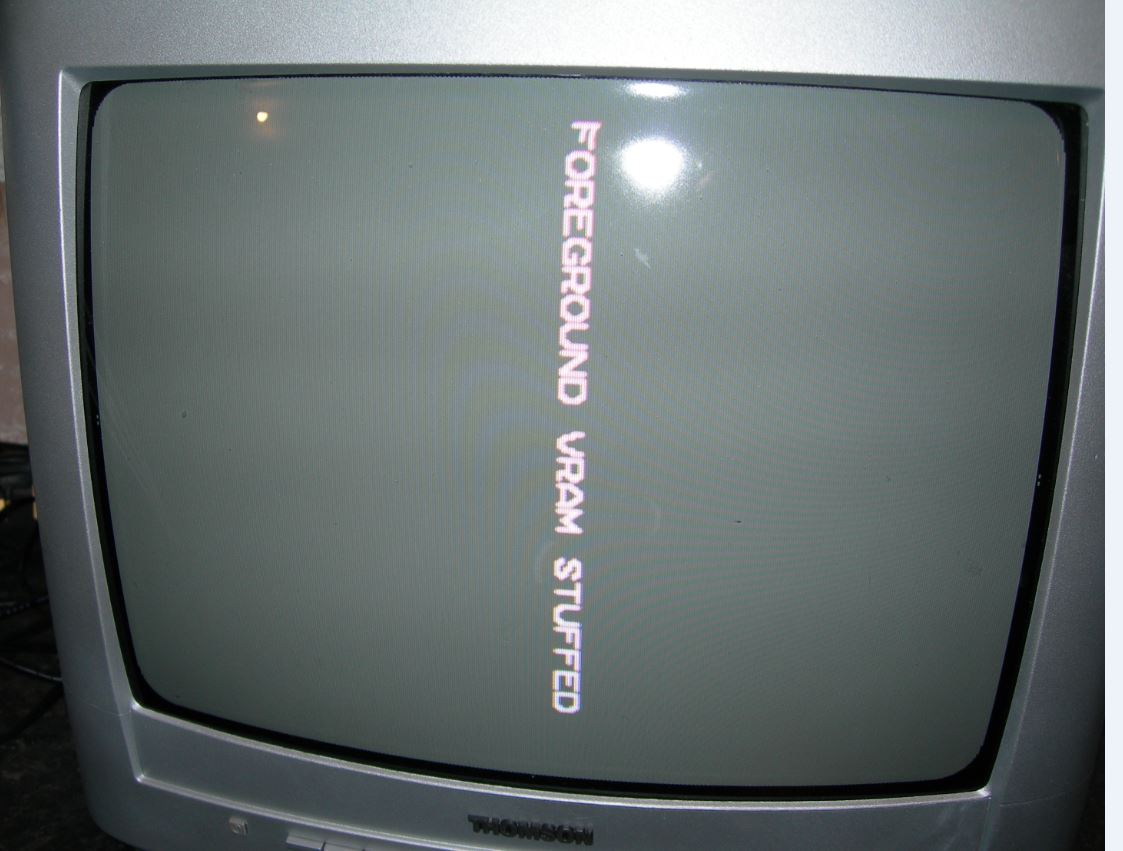
From the mame source, foreground RAM is mapped to $8800-$8fff, and looking at the schematics, this converts to page 9 (TRAM).
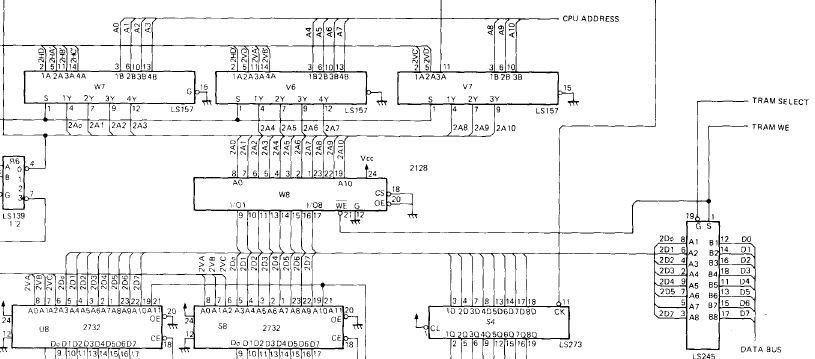
The RAM is addressed via 3 74157's which choose either the screen count or the CPU access. Data is passed between the RAM and CPU via a 74245 bus transceiver. Piggy-backing the RAM made no change. I used a logic comparator to check the 74157's - all showed ok. The 74245 is a 20 pin device so the comparator won't handle it, so as it was then the most likely fault, I swapped it out - graphics fixed!
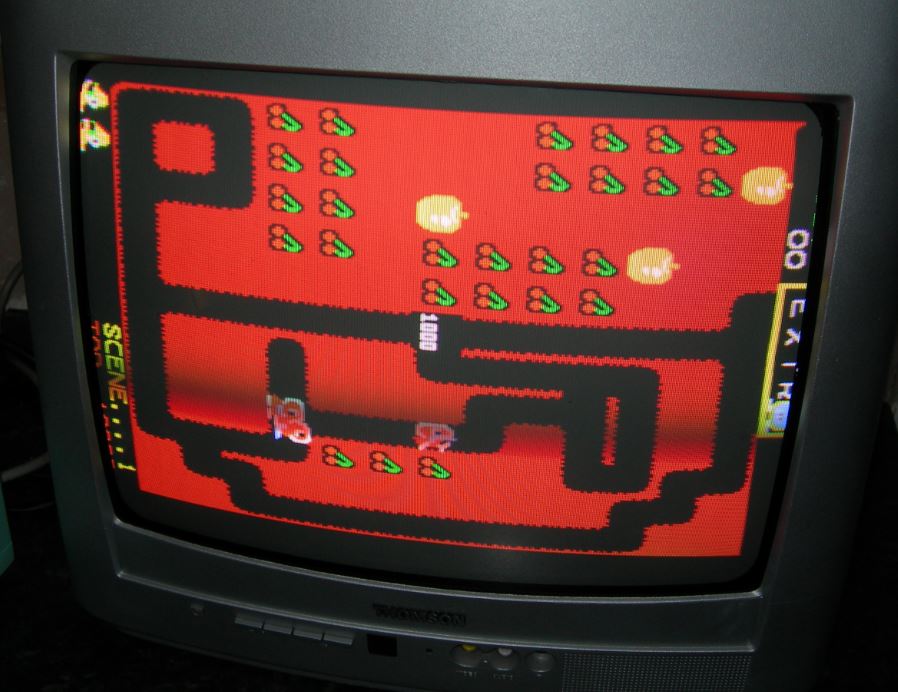
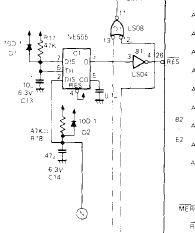
Next up, the board didn't always start up cleanly (even using the test ROM), so first thing to check was the reset circuit. Using a logic probe, the reset pulse was very short, and must have been too short to reset the CPU. The reset circuit is based around a 555 timer in monostable mode. Checking capacitors C13 (pulse width) and C14 (trigger) showed them both to be open circuit (odd they were both faulty) and replacing them restored the long pulse which now reliably resets the CPU
Finally down to the sound. Mr Do! boards don't have a built-in audio amp and rely on an external one, but I was getting no sound at all out of the board, even using an external amp.
The sound circuit on the board is very simple, using 2 76489 programmable sound generators to feed an LM324 op-amp to provide pre-amped output.

Using my trusty audio probe, I tested the input to pin 2 of the 324 and there was the familiar Mr Do! game sound. Working along the circuit, the output of that amp at pin 1 also had sound. This feeds the 2nd amp (on the same chip), but checking pin 14 there was no output from the 2nd stage. Swapping out the LM324 restored sound, and now have a fully working Mr Do! board to give back to its owner next time I see them.
From the mame source, foreground RAM is mapped to $8800-$8fff, and looking at the schematics, this converts to page 9 (TRAM).
The RAM is addressed via 3 74157's which choose either the screen count or the CPU access. Data is passed between the RAM and CPU via a 74245 bus transceiver. Piggy-backing the RAM made no change. I used a logic comparator to check the 74157's - all showed ok. The 74245 is a 20 pin device so the comparator won't handle it, so as it was then the most likely fault, I swapped it out - graphics fixed!
Next up, the board didn't always start up cleanly (even using the test ROM), so first thing to check was the reset circuit. Using a logic probe, the reset pulse was very short, and must have been too short to reset the CPU. The reset circuit is based around a 555 timer in monostable mode. Checking capacitors C13 (pulse width) and C14 (trigger) showed them both to be open circuit (odd they were both faulty) and replacing them restored the long pulse which now reliably resets the CPU
Finally down to the sound. Mr Do! boards don't have a built-in audio amp and rely on an external one, but I was getting no sound at all out of the board, even using an external amp.
The sound circuit on the board is very simple, using 2 76489 programmable sound generators to feed an LM324 op-amp to provide pre-amped output.
Using my trusty audio probe, I tested the input to pin 2 of the 324 and there was the familiar Mr Do! game sound. Working along the circuit, the output of that amp at pin 1 also had sound. This feeds the 2nd amp (on the same chip), but checking pin 14 there was no output from the 2nd stage. Swapping out the LM324 restored sound, and now have a fully working Mr Do! board to give back to its owner next time I see them.
