Stern Scramble

jonhughes

Active member
vacBacker
Feedback
51 (100%)
Credits
1,112CR
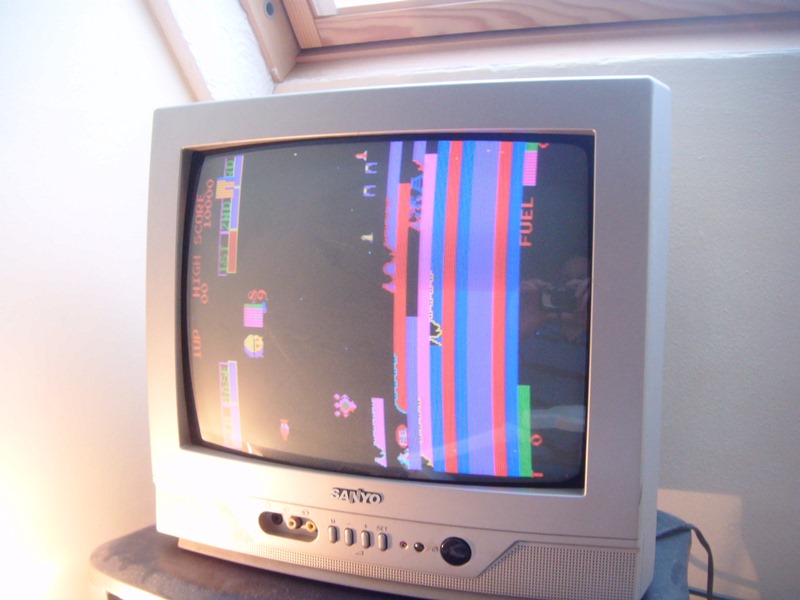
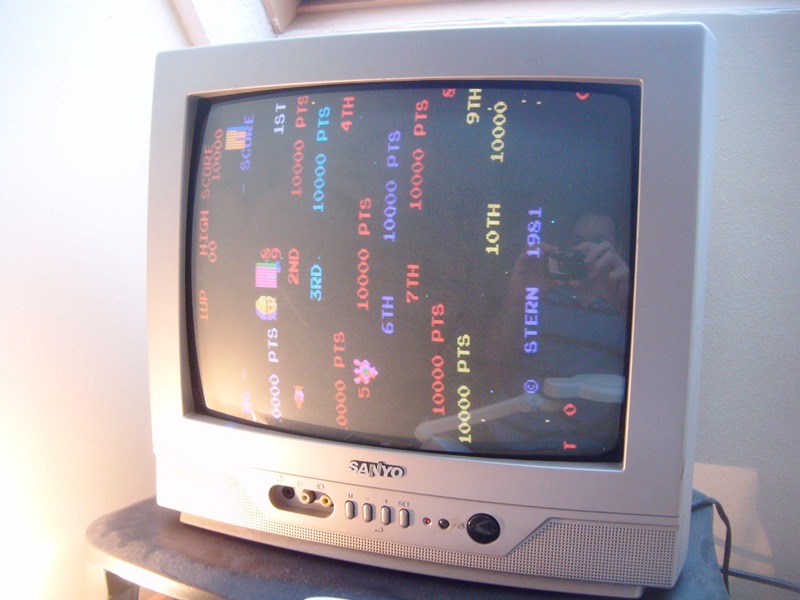
Picked up a Stern Scramble board a while back and this was next in line from the repair pile. Board was running but all the graphics were well... 'Scrambled'.

Here's what I was getting.

DSCF8147.JPG


DSCF8148.JPG


DSCF8150.JPG


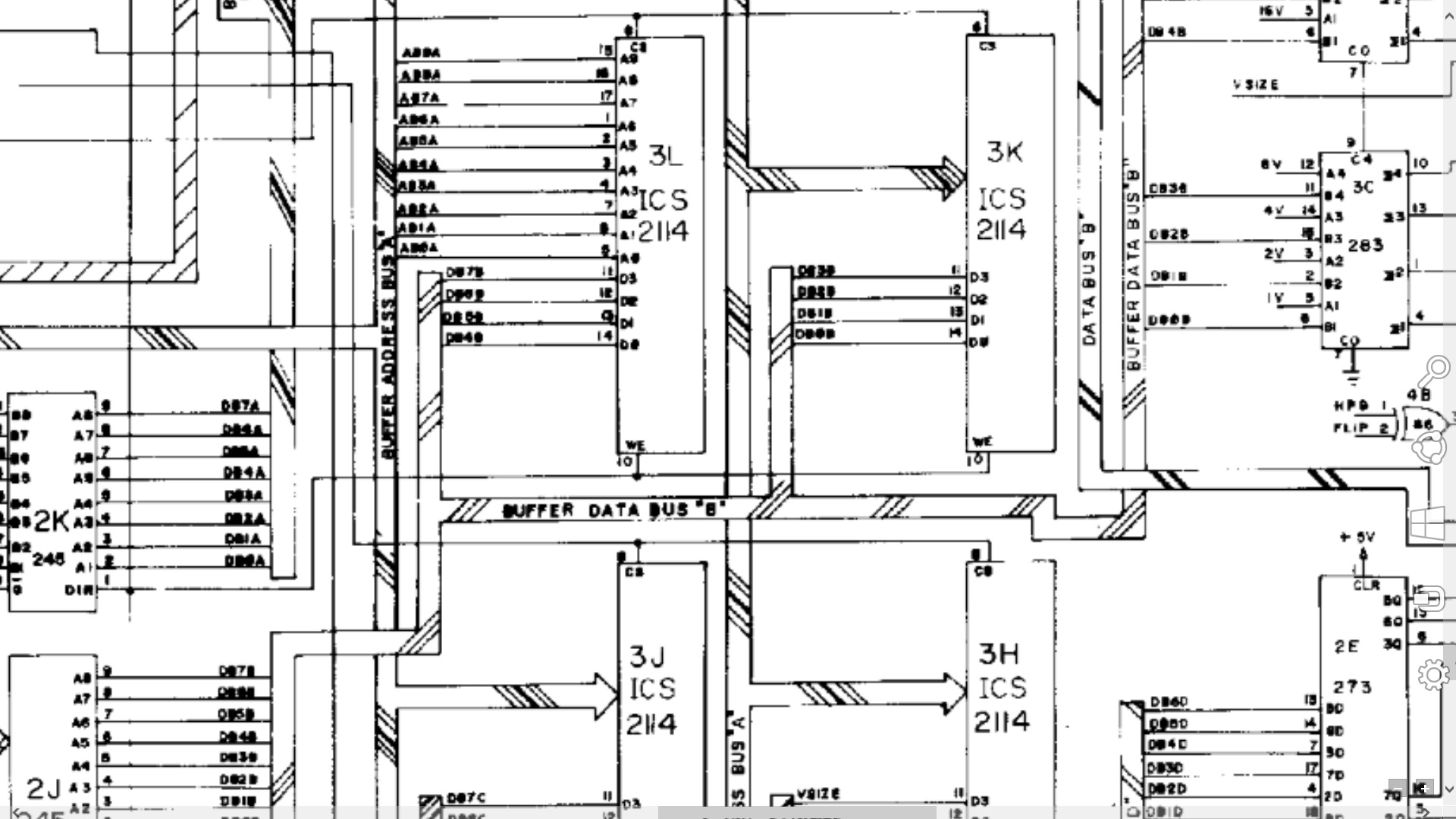
Very mixed up display. After reading a few repair threads I narrowed the fault down to a group of 3 chip types. 74LS138 being one of them. Here they are in the schematics. The logic probe was showing that 3C pins 13 & 14 were stuck high but pin 13 on 3D was also stuck high.
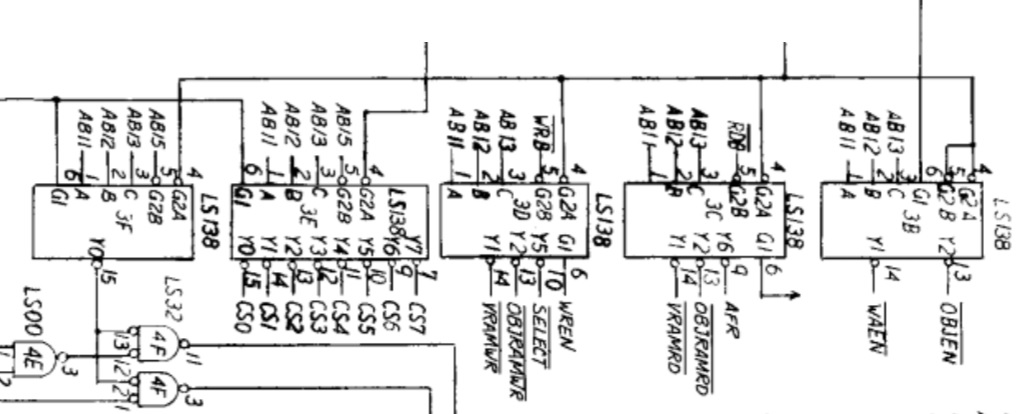
Scramble1.jpg


I had a spare 138 chip so piggy backed the chip on 3C and got a strange response. Removed it and tried it on 3D and boom... the garbage disappeared.

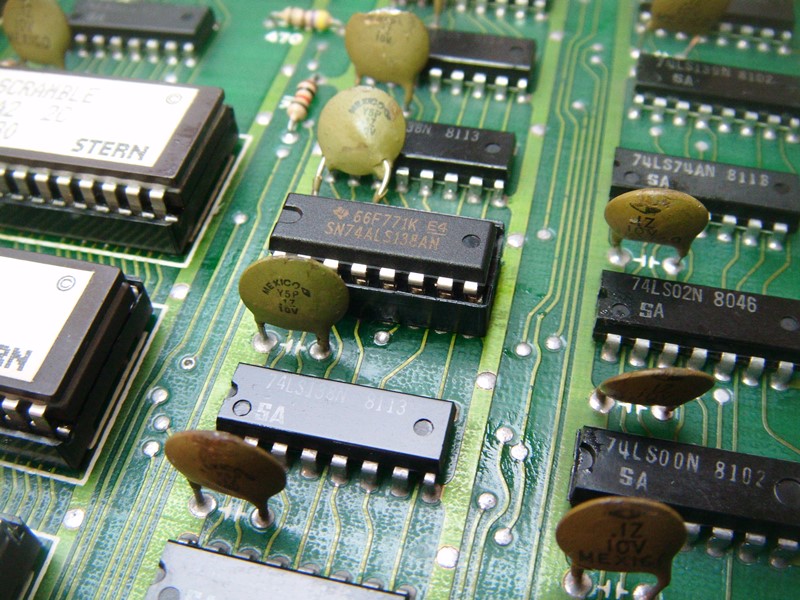
Removed the bad chip and inserted a new socket and replaced the 138.
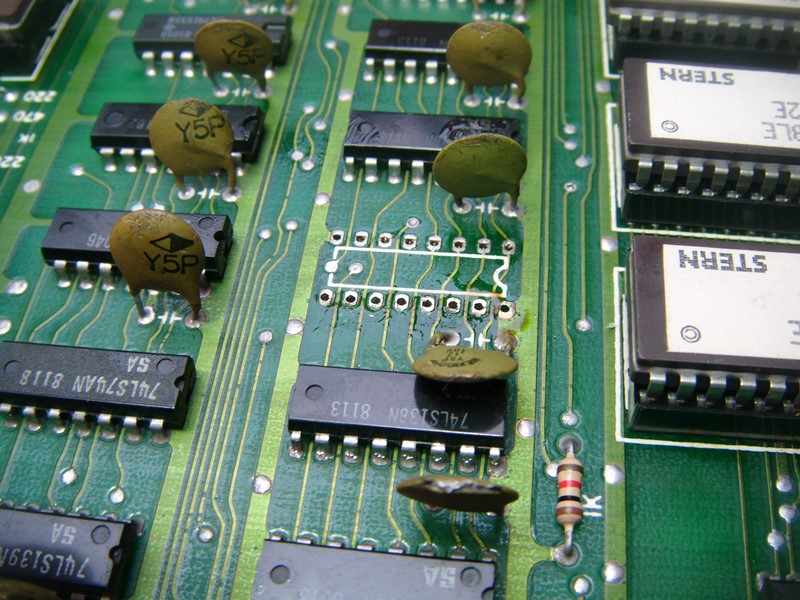
DSCF8152.JPG


DSCF8153.JPG


An odd thing happened next. The board would just hang on the boot cross hatch pattern and go no further. Cut a long story short and after a bit of a panic discovered my Supergun Vogatek 2006 has crapped out. I'm now using a MK III which is all I've got left. There are ghosts in my test rig. Still a nice result in the end.
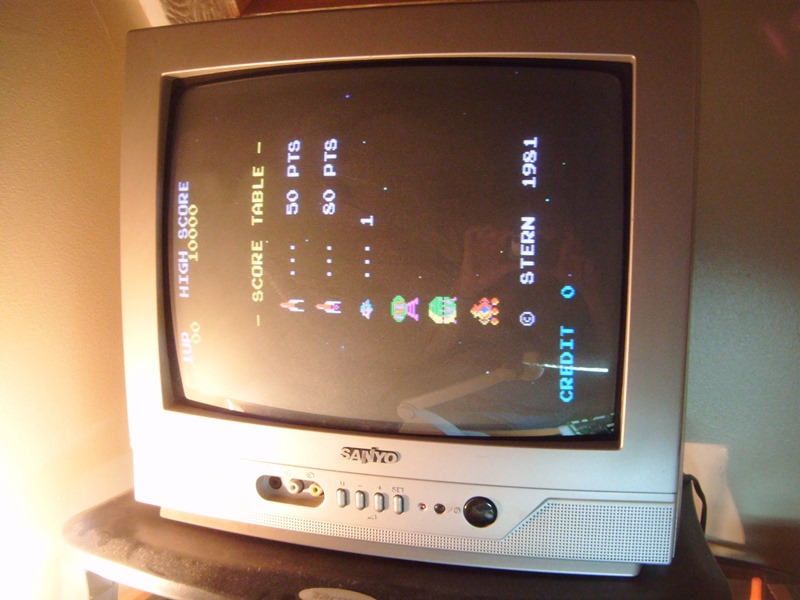
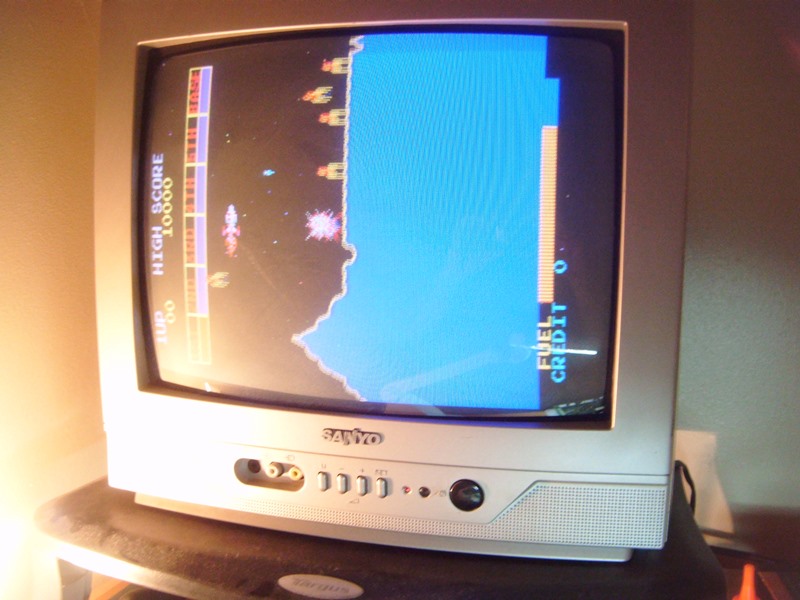
DSCF8154.JPG


DSCF8155.JPG
 

RGP

Meeter & Greeter
Feedback
5 (100%)
Credits
2,039CR
Nice work John

What does AB mean in the addressing?

Normally A0-A15 is the primary address bus but then I see them become other things like AB or SAD etc
 

jonhughes

Active member
vacBacker
Feedback
51 (100%)
Credits
1,112CR
Sorry, beyond my knowledge.

Address.jpg


I'm guessing it's just address bus - here's an extract from Galaga which pretty much does that.jonhughes2015-01-01 22:31:05
 

guddler

Busting vectors like it's 1982!
vacBacker
Feedback
10 (100%)
Credits
4,054CR
AB0-15 just means the address lines are buffered. Well, thats the normal convention anyway.

So in all likelihood they go through a 74LS244 (data lines would use the bi-directional 245). Before the 244 they would be unbuffered, therefore A0-15, after the 244 they'd become AB0-15. Obviously not all 16 address bits would be buffered since you don't buffer the upper address selection bits.
 

guddler

Busting vectors like it's 1982!
vacBacker
Feedback
10 (100%)
Credits
4,054CR
It means the signal is being forced high and cannot go low. Usually because the IC in question has an internal logic gate shorted to +5v. But not always, it may be a chip that the output pin is connected to that has the problem, or a track on the board, or, or, or...

Also need to be careful that you don't jump to the conclusion that your outputs are stuck in any state when (as was mentioned in the other thread earlier) it may simply be that the chip is working perfectly but the code is never reaching a state that would make the pin toggle. They don't always. Some pins are meant to stay high or low and maybe only very occasionally toggle.
 

Stevros

Active member
Credits
505CR
guddler said:
It means the signal is being forced high and cannot go low. Usually because the IC in question has an internal logic gate shorted to +5v. But not always, it may be a chip that the output pin is connected to that has the problem, or a track on the board, or, or, or...

Also need to be careful that you don't jump to the conclusion that your outputs are stuck in any state when (as was mentioned in the other thread earlier) it may simply be that the chip is working perfectly but the code is never reaching a state that would make the pin toggle. They don't always. Some pins are meant to stay high or low and maybe only very occasionally toggle.

Thank you
smiley20.gif
 

ben76

Hunts Spies
Feedback
7 (100%)
Credits
1,136CR
Stevros said:
What does "stuck high" mean?

Nice work btw.
basically using a logic probe you can sort of get 3 responses. High Low and pulse (you can get combinations too) if an input/output is stuck then its not working right. A simple example would be on a control.... press a button and the signal should go low (ground) if it doesn't (stays high) then you are on the right lines of fixing it usually. Again it could be a lot of things just trying to give a simple answer :)

- Ben
 

jonhughes

Active member
vacBacker
Feedback
51 (100%)
Credits
1,112CR
Stevros said:
Thanks Ben, about time I learnt myself considering the cost of such repairs.

I started tentative repairing about 10 years ago with no clue at all about electronics, other than having an A level in Physics. I do have a Master of Science degree in Structural Engineering and my day job involves significant problem solving, continuously. I just see this another problem solving exercise.

My soldering skills are far better than my logic trouble shooting skills but I'm learning all the time.

You just need to be dedicated and have a fair amount of spare time. I believe whatever you're prepared to put in to learning the more you will get out of it.

Good luck.
 

RGP

Meeter & Greeter
Feedback
5 (100%)
Credits
2,039CR
thanks all, the stuck input is a good example, have fixed a ton of board input issues after getting a tutorial off Luke about 2 years ago.

Is there a list of these conventions for naming signals somewhere?

With not coming from electronics its useful to be able to design something in such a way that others can also understand it. I know you could include a legend etc but if theres an agreed set of names for things isn't it better to use them than reinvent the wheel.
 

guddler

Busting vectors like it's 1982!
vacBacker
Feedback
10 (100%)
Credits
4,054CR
Not aware that there is / was a standard at the time we're talking about, no. Couldn't say if there is or isn't now.
 
Top